
如果你曾经搜索过一个食谱,然后不得不翻阅一篇 3,000 字的关于焦糖南瓜芝士蛋糕的回忆录,才能最终找到食材,你就能理解 AI 概览对自然流量的影响。
现在,你可以输入同样的查询,只得到你想要的食谱,而不需要阅读冗长的故事。
AI 生成答案让人们更快找到所需信息,这正在改变人们获取信息的方式。
与此同时,谷歌的 AI 概览和零点击搜索也改变了搜索页面和整体营销环境。
许多品牌在 AI 和零点击内容的冲击下,发现自然网站流量在下降。
即便是 HubSpot 也公开在博客和视频中讨论了这个话题。
HubSpot CMO Kipp Bodnar 在视频中表示:“你必须明白,现在任何公司可获取的搜索流量总量已经缩小。你必须聪明,要有差异化的数据和观点,让自己显得独一无二。如果没有,很难成功。”
如果你的团队正面临这种变化,你并不孤单,但也不是无能为力。
好消息是,你可能已经在使用的一些基础 SEO 策略,也可以帮助你优化内容以适应 AI 概览,并减轻 AIO 对流量和关键业绩指标的影响。
为什么 AI 概览很重要?
与传统的“特色摘要”(Featured Snippet)只显示单页面信息,或“知识面板”(Knowledge Panel)可验证公司信息不同,谷歌的 AI 概览会综合多个来源的信息,尝试直接回答查询。
它还提供了查看扩展答案的选项,这可能会将传统搜索结果推到页面下方,从而减少自然流量。
例如,我最近去希腊旅行,需要从雅典机场前往山区的一个小村庄。我们团队的其他成员已经预订了一周的面包车,而我没有交通工具。
AI 概览给出的答案比下面的链接更有帮助,否则我需要阅读多个公交路线才能找到答案。
当然,我还是访问了 Rome2Rio 网站确认路线和时间,但 AI 概览已经提供了大部分所需信息。
好消息是,这些步骤也能提高你在搜索引擎中的可见性。
AI 概览对自然流量的实际影响
点击率是否因为 AI 而下降?
这是大家关注的大问题,答案是“是”,但背后有更多细节。
根据受众研究平台 SparkToro 和 Semrush 公司 Datos 的最新分析,谷歌搜索量在过去一年增长了近 22%,每日仍有 140 亿次搜索,是 ChatGPT 搜索量的 373 倍。
然而,2024 年研究发现,近 60% 的搜索最终没有点击。
Similarweb 的研究报告也显示,零点击搜索比例从 56% 增加到 69%,与 AIO 推出的一年内一致。随着越来越多人使用 AI 获取股票、体育、天气、政治和其他实时资讯,新闻网站流量从 23 亿下降到不到 17 亿。
如果你仔细监控 Google Search Console,通常会看到这种趋势:
-
展示量上升,因为你的内容仍可能出现在 AI 概览中
-
点击率下降,因为用户在 AI 生成的搜索结果页上就能快速获取答案
-
对于产品和操作指南库丰富的品牌,剩余点击的转化率可能保持稳定甚至提高,因为流量更精准,用户购买意图更强
这不仅是 AI 的作用,也是内容渠道多样化趋势的延续。
正如 HubSpot CEO Yamini Rangan 在 9 月 INBOUND 主旨演讲中所说:
“营销漏斗的顶部已经分散。买家在 TikTok、YouTube、Reddit、播客上活动。买家过去会从你的网站内容开始,现在,他们可能在你的网站之外的任何地方。”
AI 概览也影响了漏斗中部,因为买家可以更快获取推荐或比较选项。底部漏斗正在“转型”——AI 使得向更有购买意向的用户提供个性化、相关内容更容易。
作为 HubSpot 钻石合作伙伴,我们过去将大量精力放在漏斗顶部,通过教育性内容帮助客户网站流量逐年增长。但我们也注意到,部分流量是研究者、其他营销人员甚至竞争对手,这些人根本没有购买意图。
现在,重点转向找到符合理想客户画像的买家,并通过内容针对性地回答特定问题,例如:
-
为什么我们真的需要这个产品或服务?
-
它与现状或竞争对手有何不同?
-
我们大概需要花多少钱?
-
如何成功规划和实施?
-
行业内其他公司如何使用它以取得更好效果?
内容营销仍然重要,但方法已转变。买家可能最初在播客或社交平台上听说品牌,也可能去 Reddit 获取更真实的社区反馈。
他们可能在研究其他选项时订阅新闻通讯。在某个阶段,他们会希望看到性能证明,如案例研究和客户评价,然后再访问网站或返回网站,查看更决策导向的内容,如价格页面或报价计算器。
哪些类型的查询最受影响?
目前,谷歌 AI 概览主要来自信息型搜索。
这很符合搜索体验逻辑。如果你想学习某件事,尤其是可以分步骤操作的事情,AI 概览可以更快提供答案,通常无需访问网站。
Semrush 对 3 月触发 AI 概览的搜索查询分析显示:
-
88% 是信息型查询
-
近 9% 是商业型查询(有人在研究品牌或产品),过去一年持续增长
-
1.76% 是交易型查询(有人寻求购买),预计也会增长
-
仅 1.4% 是导航型查询(有人寻找特定网站)

同样值得注意的是,“AI 模式”,即谷歌的实验性全 AI 搜索,会将搜索词和问题拆解为相关查询,从而可能重新定义或重塑用户的搜索路径。
用户可以继续提出后续问题,并从多种来源获得答案,这些答案会以对话式的方式进行汇总。
回到希腊的例子,我们在规划旅行时参考了家人的很多意见,但同时也想找出从住宿地出发可驾车到达的最佳海滩
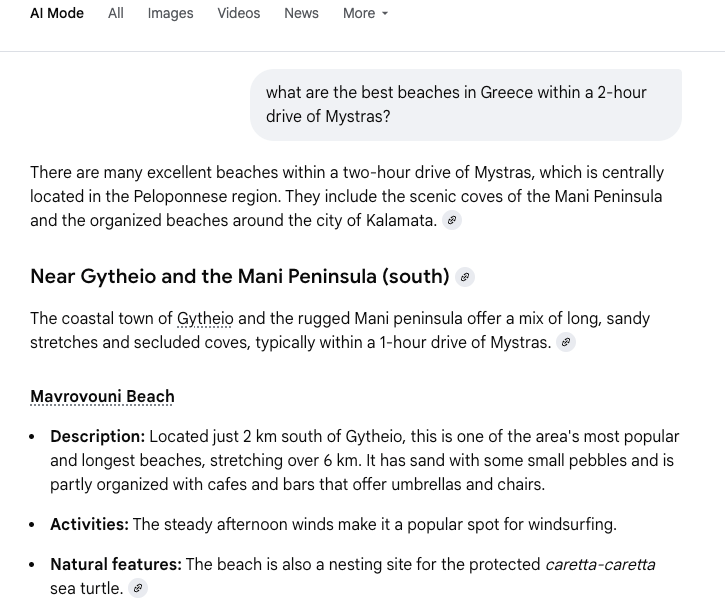
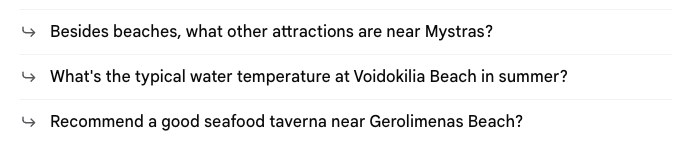
With each question, there’s a list of related questions I can explore to learn more:
Savvy brands are already deconstructing AI Mode and using the findings to update their content.
For instance, you can use Locomotive Agency’s Query Fan-Out Tool or similar tools to analyze how well a page answers typical questions that would surface within an AI search.
Here are some examples of recommendations the tool made for our website design services page:

We’ve used this tool to identify areas where clients could add new sections to existing pages, such as:
- Charts comparing their solution to others on the market
- Adding a short, simple “how to use this in three steps” section
- New sections with frequently asked questions and answers
- Pricing or ROI calculators
- Other new resources people can explore to learn more
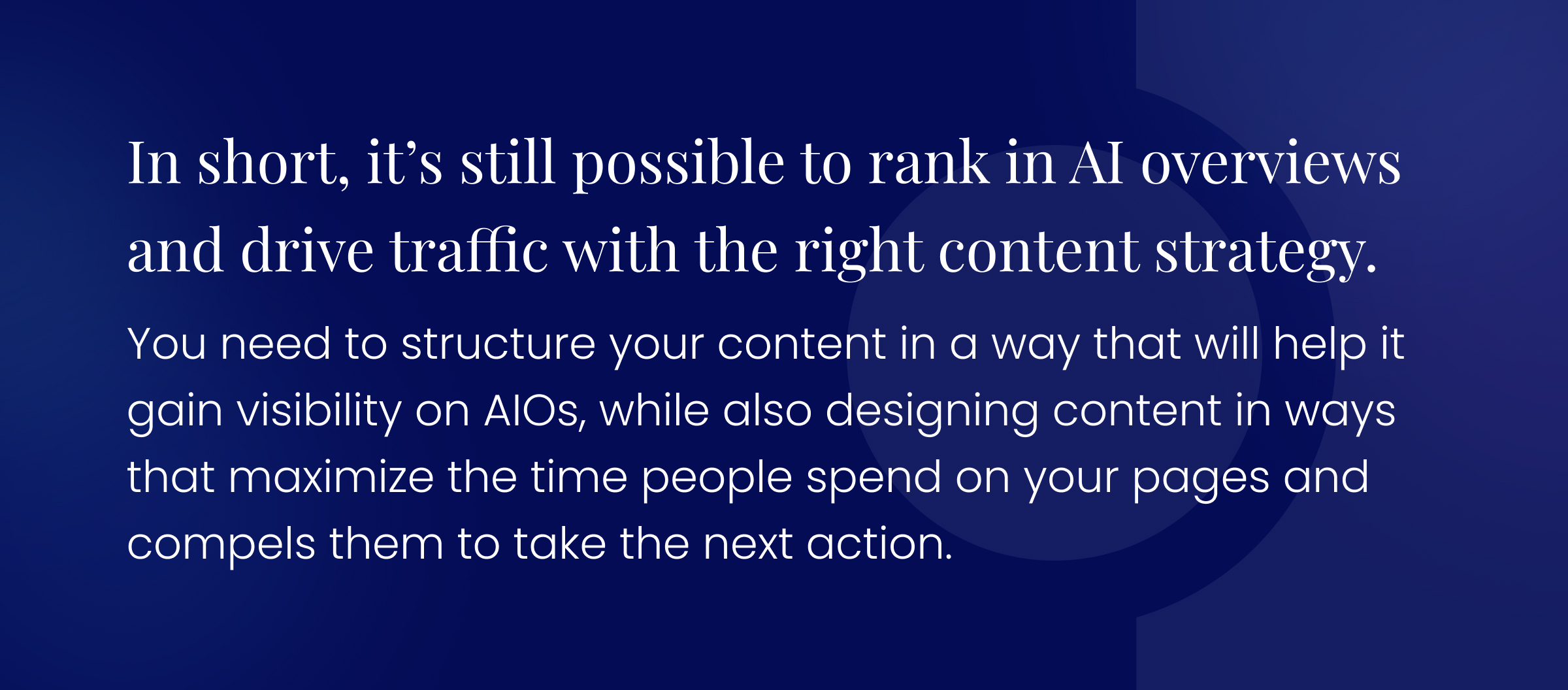
In short, it’s still possible to rank in AI overviews and drive traffic with the right content strategy. You need to structure your content in a way that will help it gain visibility on AIOs, while also designing content in ways that maximize the time people spend on your pages and compels them to take the next action.
You need compelling, click-worthy reasons: deeper first-hand expertise, original data, tools, short video demos, clear next steps. We’ve seen this with clients whose informational pages lost casual top-funnel traffic but improved lead quality after we added decision-stage content and on-page conversion paths.
What Makes Content Eligible for AIO and Clicks?
Many of the same best practices marketers have used for years to optimize for search also help improve visibility in AI.
In displaying AI overviews, Google considers content quality signals, authority, structured data, and the semantic context around the query. This means pages with clear structure, accurate information, and strong experience, expertise, authority and trust (E-E-A-T signals) have a better chance of being cited in, or informing, an AIO.
Here are some of the most important factors:
- Clarity and helpfulness – Lead with the answer and follow with more depth.
- Freshness – Content that has been recently published or updated is more likely to be displayed compared to older content.
- Structure – Content that has a natural visual hierarchy and clear headings and subheads aligned with search intent, such as frequently asked questions, performs better
- Schema markup – Schema is the preferred language of Google and helps both search engines and large language models better understand your content. For instance, you can add schema designating a new section as frequently asked questions or a how-to guide.
- Experience – While generic how-to content is less likely to drive traffic to your website, people are still looking for specific educational content from someone who has actually created the video with the software, taken the trip, or spent time working with CEOs from their industry.
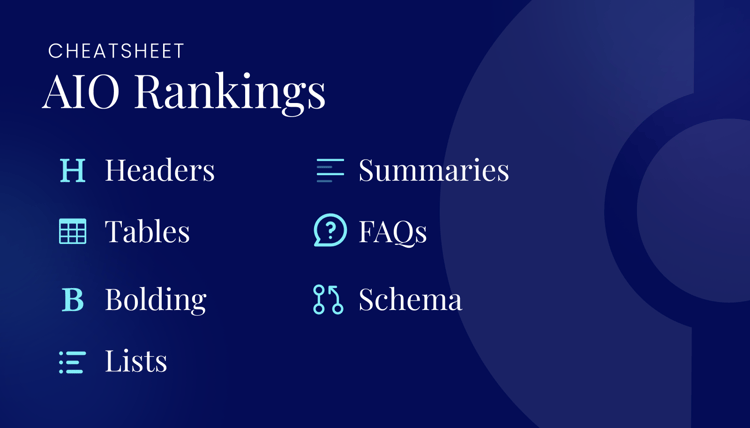
This rankings cheat sheet shows some more specific steps you can take to improve your visibility in AI overviews.
For one client, a welding technologies provider, we’ve focused on systematically adding FAQs to product and blog pages. These questions and answers are already appearing in ChatGPT and Perplexity, giving this client increased visibility while preserving site traffic.
How To Optimize Content for AI Overviews and CTR
Lead With Expertise
This is the foundation for content that drives AI search traffic and engagement.
Think about what you can offer that no one else in your industry can. That could be original research like SparkToro’s reports, hands-on experience with a product or honest reviews that help people decide.
Show your methodology, the way Ahrefs and Backlinko do with their SEO studies. Walk the reader through how you actually used something.
Basecamp’s digital book of its Shape Up methodology or Inside Figma posts showing how to achieve specific designs are great examples.
Pull back the curtain on what worked, what broke, and how you fixed it. You could even embed a short video demo so users see it, not just read it. That kind of evidence earns trust in AI-shaped search because it gives models—and humans—something concrete to quote, compare, and act on.
To enhance expertise, you’ll also want to include authors with credentials on your posts.
Answer Questions the Way AI Does
For priority search queries, write succinct answers (2-3 sentences) followed by supporting context, sources, and examples. This mirrors how AIOs and People Also Ask organize information. Tools like AlsoAsked and SEMrush help you mine related questions and search intent; then reflect that hierarchy in your structured headers and on-page Q&A. (Our clients see stronger coverage—and we’re now seeing those same answers picked up by AI assistants.)
Use Schema Markup or Structured Data
Mark up the essentials, including articles, FAQ sections, How To sections and Person sections for your author bio. You can even use AI to write schema. Here’s an example:
{ "@context": "https://schema.org",
"@type": "Article",
"headline": "Navigating AI Overviews’ Impact on Website Traffic and CTR",
"author": {
"@type": "Person",
"name": "Annie Zelm",
"jobTitle": "Content Director",
"worksFor": {"@type": "Organization","name": "Kuno Creative"}
},
"dateModified": "2025-10-24",
"mainEntityOfPage": "https://www.kunocreative.com/blog/ai-overviews-on-organic-traffic",
"about": ["AI Overviews", "organic traffic", "CTR", "SEO strategy"]}
Schema markup helps Google understand your intent and increases eligibility for AI-generated summaries and featured snippets.
Make sure your product data is easy for AI to read, too. OpenAI just introduced instant check-out capabilities in ChatGPT, making it even easier for people to research something and then buy it.
While B2C companies are sure to jump on this new feature, it could make sense for some aspects of B2B selling as well, especially if you sell certain products directly to customers or offer a “freemium” model with a low barrier to entry.
Diversify Content Formats
We all know people aren’t just reading blogs and downloading whitepapers the way they once did. They’re watching videos, listening to podcasts, scrolling social media, attending in-person events and hearing about your brand in so many other ways.
That means your content calendar can’t just be a list of keywords and blog posts. Think about how you can create core pieces like webinars and turn them into multiple resources like videos to add to your YouTube channel, shorter video clips and sound bites for social channels, blogs and emails.
Nearly 30% of all AI overviews cite YouTube in their results, and AI search results cite YouTube videos 200 times more than any other video platform, according to research from Search Engine Land.
We’ve seen this for our own clients. Those who invest in video content see a faster path to ranking for relevant search terms than those that only rely on written content to dominate in organic search. They also get better click-through rates.
How Kuno Creative Helps You Stay Visible in the AI Era
In a world of AI-generated content, human clarity and originality cut through.
The best blog posts, resources and videos still start with a clear story and point of view.
Our team combines strategy, content, design, technical SEO and answer engine optimization (AEO), to help you increase visibility in AIOs and drive traffic and leads.
From developing authoritative website pages and resources to properly structuring them with FAQs, schema markup and great visuals and then promoting that content on YouTube and other social media channels, our team has the breadth and depth of knowledge to help even the most niche companies succeed in search.
We often start by recommending updating existing content that’s already getting visibility but needs to be more authoritative or structured better to perform at its best.
We look for opportunities to add lists, charts, summaries and frequently asked questions that help both large language models and people quickly find what they need.
We may also recommend more in-depth glossary pages or YouTube videos on key topics to help you compete. And we’ll propose paid media strategies that boost this content while staying within your budget.
Most importantly, we do it with your goals and ideal customer profiles in mind, rather than focusing on broadly driving traffic.
Once you have the right people consuming your content (wherever that may be), our RevOps team builds workflows to help your sales team qualify and follow up with them. They’ll build dashboards in HubSpot so you can more easily see who is engaging, what deals are in the pipeline and how all your marketing activities are impacting your revenue.
If your best buyers aren’t finding you in an AI-powered search landscape, let’s fix that.
Schedule a consultation with us, and we’ll map out the fastest path from visibility to revenue.